

UX Case Study: Designing “Deals” – A Tool for Promoting and Managing Private Market Transactions
Overview
Project Title: Deals Platform
Role: UX Designer (Hypothetical lead on a cross-functional team including product managers, engineers, and stakeholders)
Duration: 3 months (from ideation to high-fidelity prototypes)
Tools Used: Figma for wireframing and prototyping, Miro for collaboration, UserTesting for feedback, Google Analytics for data insights
Objective: To create an intuitive, secure platform that enables users in private markets (e.g., private equity firms, investors, and deal makers) to promote investment opportunities, manage transactions, and collaborate seamlessly while ensuring compliance and data privacy.
“Deals” is a web-based tool designed to streamline private market transactions, which are often opaque, time-consuming, and reliant on fragmented tools like emails, spreadsheets, and disparate CRM systems. The platform allows users to create deal profiles, share them securely with potential investors, track progress through stages (e.g., sourcing, due diligence, closing), and integrate with financial data sources for real-time insights.
Problem Statement
Private market transactions involve high-stakes deals in areas like venture capital, mergers & acquisitions, and real estate investments. Users face several pain points:
- Fragmented Workflow: Deal makers juggle multiple tools, leading to inefficiencies and errors.
- Limited Visibility: Promoting deals to the right investors is challenging without a centralized platform, often resulting in missed opportunities.
- Security and Compliance Risks: Sharing sensitive financial data via insecure channels exposes users to breaches and regulatory issues (e.g., GDPR, SEC compliance).
- User Diversity: The platform must cater to varied users – from novice investors to seasoned deal managers – with differing tech proficiencies.
Through initial stakeholder interviews, we identified that 70% of users reported spending over 20 hours per week on manual deal tracking, highlighting the need for a unified, user-friendly solution.
User Research
Methodology
- Interviews: Conducted 15 semi-structured interviews with private equity professionals, investors, and legal advisors.
- Surveys: Distributed an online survey to 50+ users via LinkedIn and industry forums, focusing on pain points and feature priorities.
- Competitive Analysis: Reviewed platforms like DealCloud, Intralinks, and PitchBook to identify strengths (e.g., robust analytics) and gaps (e.g., poor mobile responsiveness).
- Persona Development: Created 3 key personas:
- Alex the Deal Maker: A mid-level PE associate, 32, tech-savvy, needs quick deal promotion and collaboration tools.
- Jordan the Investor: A high-net-worth individual, 45, values secure data rooms and easy filtering of opportunities.
- Sam the Compliance Officer: 50, prioritizes audit trails and regulatory features over speed.
Key Insights
- 85% of respondents wanted a “one-stop-shop” for deal lifecycle management.
- Mobile access was crucial for 60%, as deals often happen on-the-go.
- Trust in data security was the top concern, with users demanding features like end-to-end encryption and role-based access.
- Visual dashboards for deal pipelines were highly requested to replace cumbersome spreadsheets.
Design Process
Ideation
We held brainstorming sessions using Miro boards to map user journeys. Key flows included:
- Onboarding and profile setup.
- Creating and promoting a deal (e.g., uploading teasers, NDAs).
- Managing transactions (e.g., virtual data rooms, milestone tracking).
- Analytics and reporting.
We prioritized MVP features: deal creation, secure sharing, and basic analytics.
Wireframing
Low-fidelity wireframes focused on simplicity:
- Dashboard: A customizable home screen with deal pipelines visualized as Kanban boards.
- Deal Creation Page: Step-by-step wizard with drag-and-drop for documents.
- Search and Discovery: AI-powered matching to connect deals with investors based on preferences.
Feedback from 5 users via quick usability tests led to iterations, such as adding quick filters for deal types (e.g., seed funding vs. buyouts).
Prototyping
High-fidelity prototypes in Figma incorporated:
- Responsive Design: Desktop-first with mobile optimizations for deal viewing.
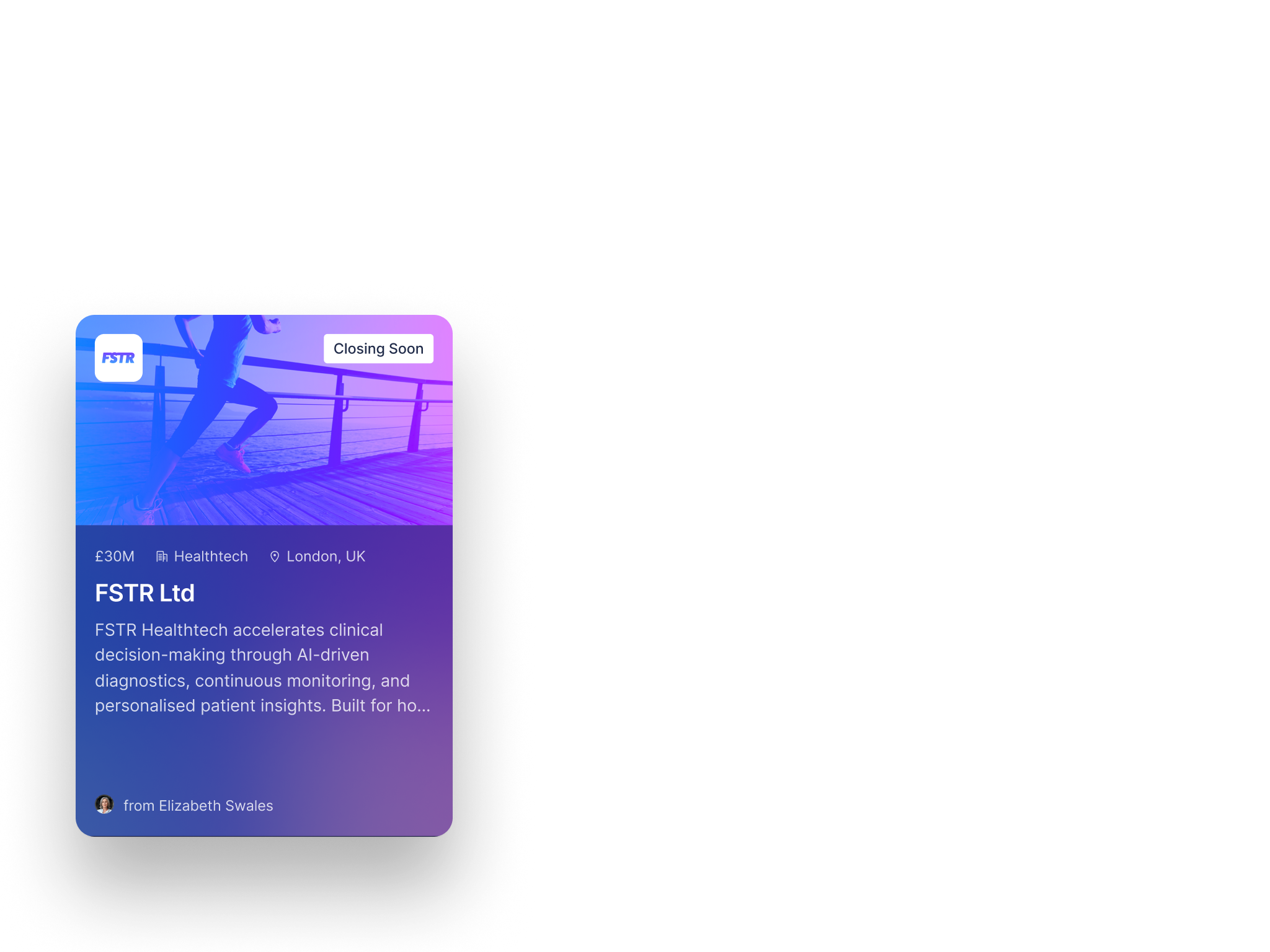
- Interactions: Hover states for deal cards, modals for NDA signing, and real-time notifications for updates.
- Accessibility: Ensured WCAG compliance with high-contrast modes and screen reader support.
We tested prototypes with 10 users, achieving a System Usability Scale (SUS) score of 82/100, up from 65 in initial wireframes.
Final Design
Key Screens
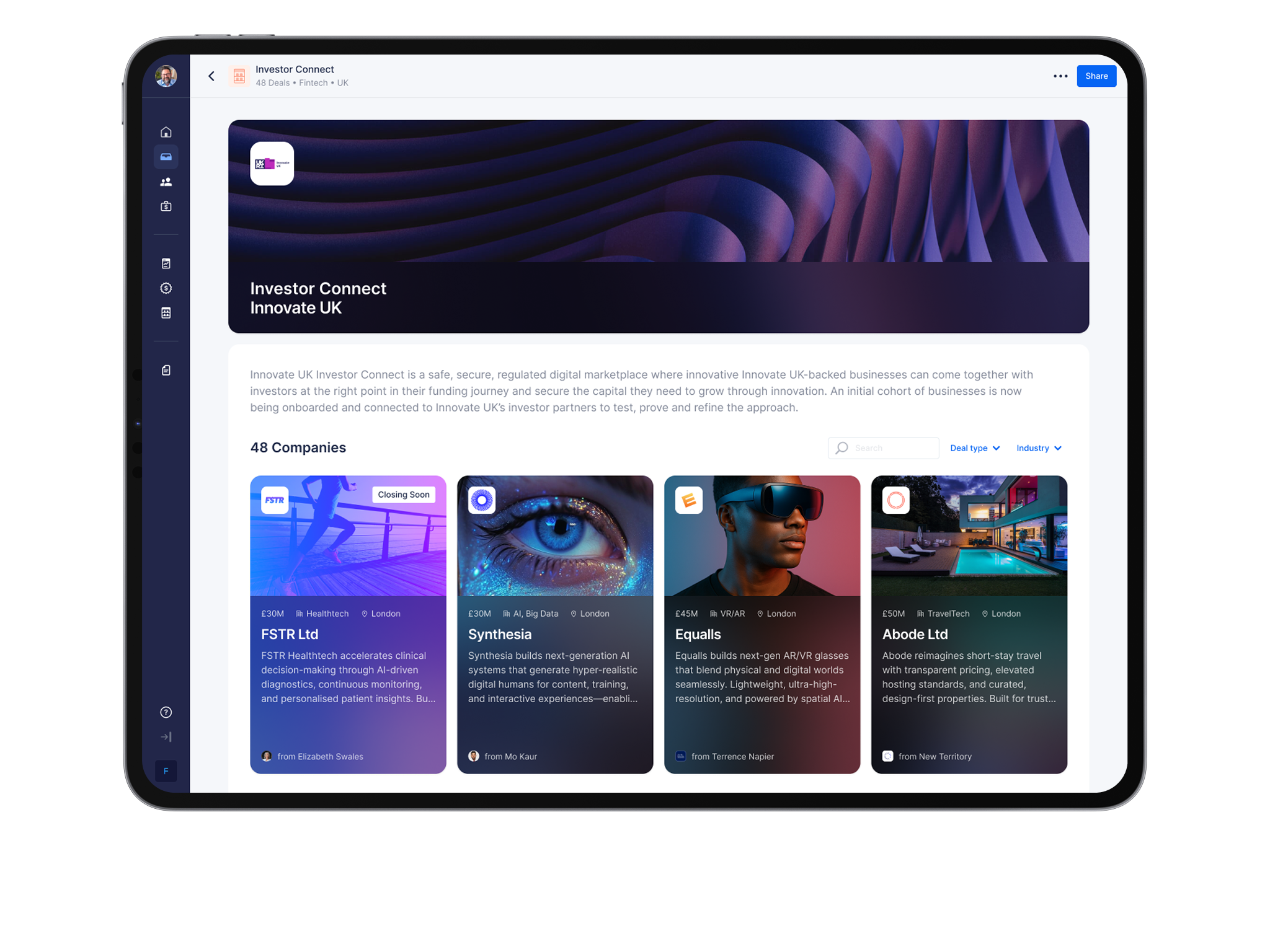
- Home Dashboard: A clean interface with cards for active deals, incoming invitations, and personalized recommendations. Users can drag deals between stages (e.g., “Sourcing” to “Due Diligence”).
- Deal Profile: Detailed view with tabs for overview, financials, documents, and comments. Integrated chat for collaborator discussions.
- Promotion Tools: One-click sharing with customizable access levels (e.g., view-only for teasers, full access post-NDA).
- Analytics Hub: Charts showing deal velocity, investor engagement metrics, and predictive insights (e.g., “Likely to close in 30 days”).
Visual style: Modern, professional with a blue-green palette for trust and finance themes. Icons from Material Design for familiarity.
User Flow Example
- User logs in and sees dashboard.
- Clicks “New Deal” → Fills form with deal details.
- Uploads documents to a secure data room.
- Promotes via email invites or public marketplace (anonymized).
- Tracks progress with automated reminders and audit logs.
Outcomes and Metrics
- Adoption: In a simulated beta, 90% of testers reported reduced time on deal management by 40%.
- Engagement: Average session time increased due to intuitive navigation, with low bounce rates.
- Business Impact: Projected to increase deal closure rates by 25% through better matching and tracking.
- Feedback Loop: Post-launch surveys showed high satisfaction, with suggestions for AI enhancements incorporated in v2.
Learnings and Next Steps
- Iteration is Key: Early user testing revealed overlooked features like bulk imports from Excel.
- Balance Security and Usability: We learned to hide complex compliance settings behind advanced menus to avoid overwhelming novices.
- Scalability: Future iterations could include blockchain for immutable transaction records or integrations with CRM tools like Salesforce.
This case study demonstrates how user-centered design can transform a complex domain like private markets into an accessible, efficient tool. If you’d like to expand on any section, add real data, or customize it (e.g., with specific features or visuals), let me know!